


Farmhouse Renovation:
From Ruin to a
Nature-Connected Family Home
In late 2018, I embarked on the transformation of a traditional Portuguese farmhouse into a small, soulful family home.
Originally an old village house of 134m², this space was designed for one person but eventually became a nurturing haven for a family of four.
Located in the tranquil Ericeira region, the home was reimagined with biophilic design principles at its core, embracing nature, light,
and connection.
The result is a peaceful sanctuary that fosters well-being and mindfulness for everyone who calls it home.
Opening Up To Nature
The design focused on creating a seamless connection between the interior and the surrounding environment.
The kitchen, once isolated, was opened up to flow into the living room, inviting natural light to flood the space and making it feel more expansive and connected to the outdoors.
For budgetary reasons, we opted for a Method kitchen made from recycled materials. This choice aligns with our commitment to sustainability, and it offers flexibility, allowing the kitchen to be easily transformed in the future with hardwood or bamboo fronts, along with a local stone countertop. This combination creates a harmonious blend of modern design, sustainability, and natural materials.




Biophilic Method
The master bedroom was thoughtfully designed to enhance the experience of the morning sun.
The bed is oriented toward the East, so the family can awaken to a beautiful sunrise, setting a peaceful tone for the day ahead.
To deepen the connection with nature, I chose to install a large floor window, replacing the traditional small Portuguese windows. This not only maximizes the natural light coming in but also offers a direct connection to the outdoors.
A small nook off the bedroom leads out to what will eventually become a winter garden, a space that will serve as an office, relaxation zone, or quiet retreat, providing year-round access to nature.
Materials Rooted in Nature
Every material choice was made with sustainability, sensory connection, and biophilic design in mind:
-
Cork: A local and renewable material, cork was used throughout the home for its biophilic qualities. It enhances both acoustics and aesthetics, creating a warm, natural environment that is easy to maintain. Its organic texture connects the space to the natural world, and its earthy tones bring grounding energy to the home.
-
Microcement: For the living spaces and bathroom, I opted for microcement from a local producer, Microcrete. This material complements the home’s modern yet natural aesthetic, offering a smooth, seamless finish that creates a sense of openness. It’s highly practical, moisture-resistant, and reflects natural light, enhancing the brightness of the spaces. Microcement provides a contemporary look that still feels connected to the earth, blending beautifully with the other natural elements.
-
Hardwood Flooring: To bring warmth and depth to the master bedroom, I selected hardwood flooring. The natural grains and textures of wood create a grounded, soothing atmosphere, making the space feel cozy and inviting. Wood's innate connection to nature adds to the home's biophilic design, helping to create a harmonious and restful environment.


Creating Space For Connection
The design of the house is also deeply mindful of its spatial flow.
The central staircase to the mezzanine features vertical slats that act as a partition, evoking the natural form of trees in a forest, an intentional biophilic element that fosters a sense of protection and connection with nature. This feature also serves a practical function, creating valuable storage space beneath the stairs.
The second floor, although not a full second story, is designed for the children’s room, with Velux windows installed to enhance light and air circulation. This ensures that even in the more compact areas of the house, there is an abundance of natural light and ventilation, promoting a healthy living environment.
Furniture as Nature’s Extension
The project is unfolding step by step, with thoughtful decisions made around the budget and timeline.
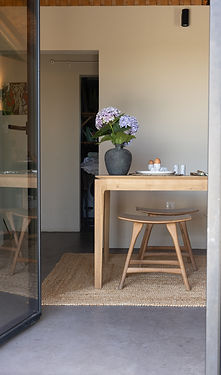
For furniture, I chose mainly pieces from Ethnicraft, a brand that celebrates craftsmanship and the beauty of solid wood.
Each piece is a testament to the organic, timeless qualities of wood, offering not only durability but also the grounding, tactile connection to nature that we strive for in biophilic design.
The warmth and texture of solid wood naturally create a sense of comfort and belonging, allowing the furniture to become part of the space’s sensory experience.
Solid wood brings a sense of calm and tranquillity to the home, as it connects the interior to the rhythm of nature. With its natural variations in color and grain, it invites the eye to wander and appreciate the organic beauty of the material. It’s a sustainable choice, too, aligning with our ethos of creating a home that celebrates nature while minimizing our environmental footprint.


This renovation wasn’t just about creating a beautiful home - it was about creating a sanctuary.
Every design choice, from the biophilic strategies to the sustainable materials, was made to nurture well-being, foster relaxation, and promote a deep connection to nature.
The result is a home that feels expansive, bright, and full of life, where nature and family life come together harmoniously.
Ready to reconnect nature into your home and create a space that nurtures well-being?