


A Walk Through Gulbenkian: Where Architecture and Nature Meet
In the heart of Lisbon, there’s a place where the city slows down and nature quietly takes over the Gulbenkian Garden. It’s not just a park. It’s a space where people come to breathe, connect, and simply be.
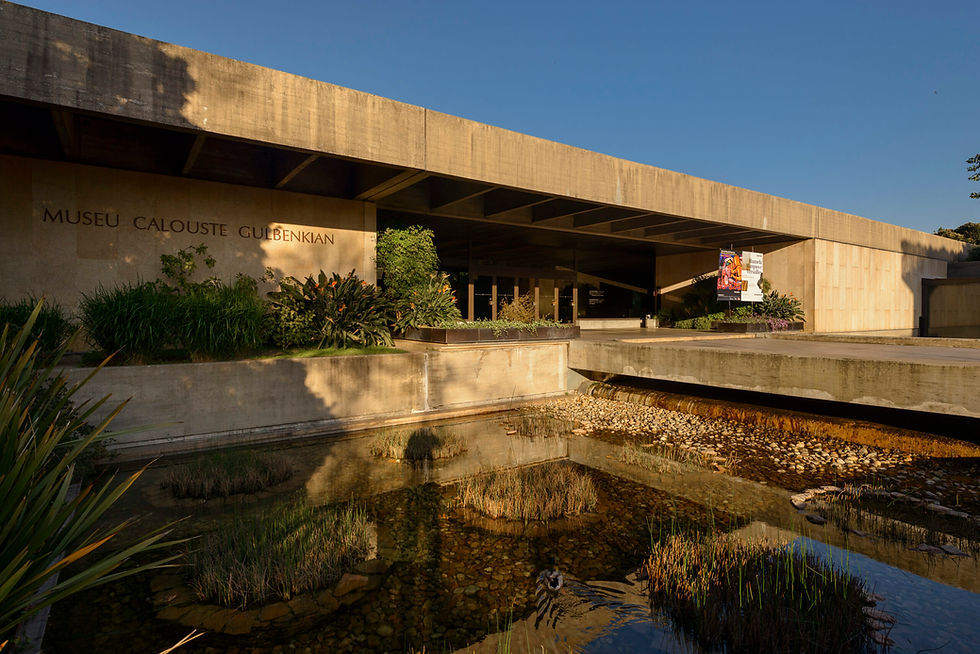
Yesterday, I spent the afternoon walking through its winding paths, across floating stairs, past streams and bamboo groves. Every corner feels like a new scene, shaded under old trees, open to the sun in wide meadows, or softly framed by water reflections. It reminded me how powerful design can be when it’s guided by nature, not imposed on it.
A Vision Rooted in Connection
The Gulbenkian Garden was created in the 1960s alongside the foundation’s museum and headquarters. The architects Ruy Jervis d’Athouguia, Pedro Cid, and Alberto Pessoa worked closely with landscape architects António Viana Barreto and Gonçalo Ribeiro Telles, one of Portugal’s pioneers of ecological design.
Their shared vision was clear: to build a place where architecture and landscape coexist, each enhancing the other. Instead of separating buildings from nature, they designed a flowing environment that encourages people to move freely between indoors and outdoors, art and life, culture and contemplation.
That idea to design spaces that breathe with their surroundings feels deeply relevant today.
A Garden of Discovery
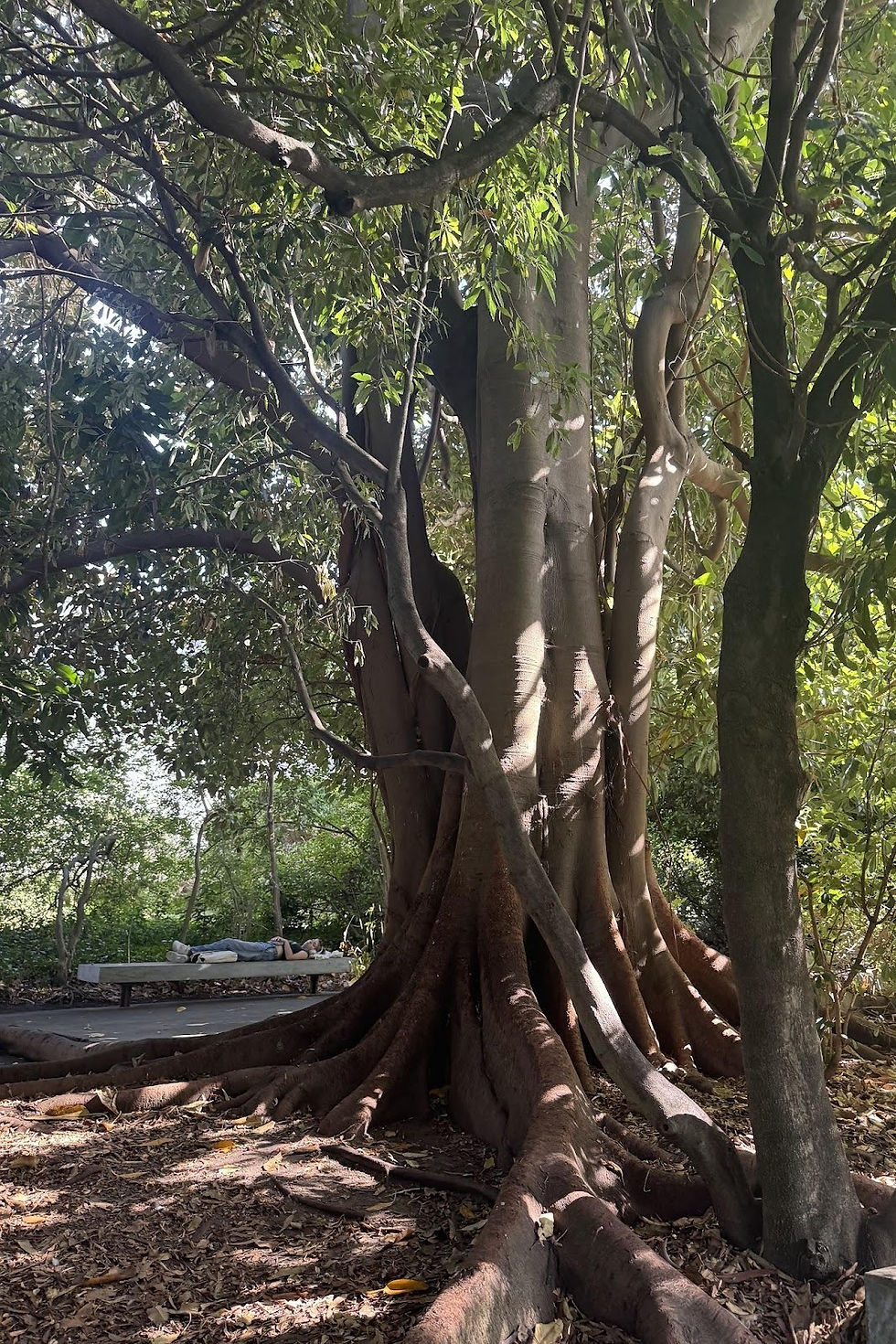
The garden is often described as modernist, but what makes it timeless is its natural rhythm. It doesn’t follow formal European symmetry or ornamental order. Instead, it feels intuitive and alive, like a walk through a living ecosystem.
While some parts might remind visitors of Japanese design, the stepping stones, bamboo paths, and calm ponds, the spirit of the garden is purely Portuguese. It reflects Lisbon’s light, Mediterranean plants, and the softness of the Atlantic air.
The recent expansion by architect Kengo Kuma and landscape designer Vladimir Djurovic continues that legacy. Their goal was not to redesign, but to deepen creating an “urban forest” that strengthens biodiversity and keeps the dialogue between architecture and nature alive.
This philosophy of simplicity and connection to nature has attracted artists, architects, designers, and travelers from around the world.

Design that Speaks to Our Senses
What I find most beautiful about Gulbenkian is how it connects to human senses. Every element feels intentional: the sound of running water, the cool shade beneath a dense canopy, the texture of stone under your feet.
You move from open sunlit lawns to quiet, protected corners. You cross bridges and terraces that gently guide your gaze. You can sit under an old tree, watch fish in the pond, or listen to birds while surrounded by bamboo.
This is what I would call design for well-being, not through luxury or excess, but through awareness. It’s a reminder that we thrive when spaces respond to natural systems: light, air, movement, sound, and life.
The Amphitheatre: Gathering in Nature
At the heart of the garden lies a circular amphitheatre facing the lake, a place for music, gatherings, and open-air performances. It’s one of the most symbolic parts of the park: a space that blends culture and nature without barriers.
Here, people sit surrounded by trees, listening to sounds carried gently by the water. It’s a design gesture that reflects something universal that humans are meant to gather in nature, not apart from it.
Why Comporta Resonates
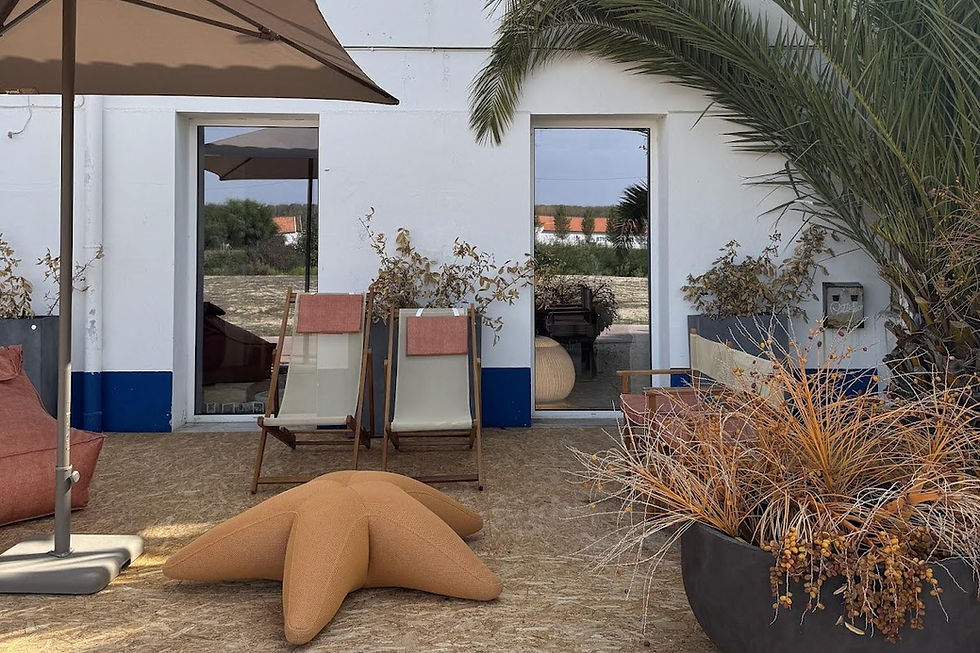
Comporta has become more than just a beach destination. Its style resonates because it captures what so many of us are craving: a slower pace, an authentic connection to nature, and interiors that feel calm, soulful, and lived-in.
Unlike the glossy flash of the Côte d’Azur, Comporta offers a subtler luxury. Here, design doesn’t aim to impress but to embrace.

What the Garden Teaches
As I walked, I realised how much this place embodies the values I hold at Arco de Iris:
Simplicity over excess – letting nature lead the design.
Harmony between built and natural elements – architecture that feels integrated, not imposed.
Spaces for reflection and belonging – where people can reconnect with themselves and their surroundings.
The Gulbenkian Garden is a living example of what happens when design serves a larger purpose: to restore balance, to nurture well-being, and to remind us of our deep relationship with the natural world.
A Quiet Reminder
Leaving the park, I carried a feeling of calm that stayed with me for hours, the kind that comes from being surrounded by something both human and wild.
It reminded me that great design doesn’t shout. It listens. It doesn’t dominate nature. It learns from it. And it doesn’t just create beauty, it creates connection.
That’s the kind of work I do through Arco de Iris, crafting spaces that invite people to slow down, breathe, and feel at home in the living world around them.

Comments